
The industrial process of making bread is made up of steps that are all equally important. Most bakeries have state-of-the-art equipment that allow the production of thousands of loaves each day. The tunnel oven is one essential piece of equipment used during this process.
You can find the best tunnel ovens for sale if you wish to start your bakery. There is a lot involved in the industrial process of making bread. We will take you through the step-by-step process.
Storage and Dosage of Ingredients
This is the first step in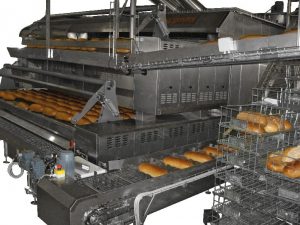 the manufacturing process and the entry of raw materials into the industrial production environment. The preliminary phase is the storage of these ingredients before their consumption on the production lines. The available storage options can contain several tons of flour, sugar, or certain liquid ingredients such as chocolate.
Kneading
Many bakers will tell you that this is the crucial step! The kneading process in bread making plays an essential technological role in the dough’s texturing and the development of flavors and aromas.
The Head of the Line
Once the dough is made, it is conveyed to a continuous industrial line which aims to transform a mass of dough into a finished product of good size, weight, shape, filled, and decorated as expected. These lines of great lengths and composed of conveyor belts and specialized tools allow the product to be given its baguette, roll, pizza, or brochette shape, and the products pushed and baked in molds to be placed there (bread crumb or brioche). There are two main methods of manufacturing products: either using a rolled strip or by the process of dividing and then rounding the dough.
Fermentation
The process is ancestral and allows bakery products to gain in volume and flavor. The yeasts and possibly the leaven introduced during kneading will release fermentation gases which will be retained by the gluten network of the dough and allow it to swell.
Scarification
Part of the surface of the dough pieces is incised to allow the product during cooking to develop harmoniously and aesthetically. This industrial step is automated using automated machines or robots reproducing the gesture of the baker’s blade strike.
Cooking
It is at this stage that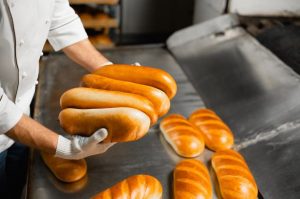 the so tasty smell of baked goods appears! This is where the thermal effects and fermentation processes give the product its final volume. Industrial ovens are often tunnels through which dough pieces are conveyed.
Cooling
This bleeding step allows the baked bread to cool. The products must cool down for freezing or conditioning and packaging operations, in which case the risk of degrading the final quality of the product would be very high. The bread is then packaged before it reaches several shops and retail outlets.…